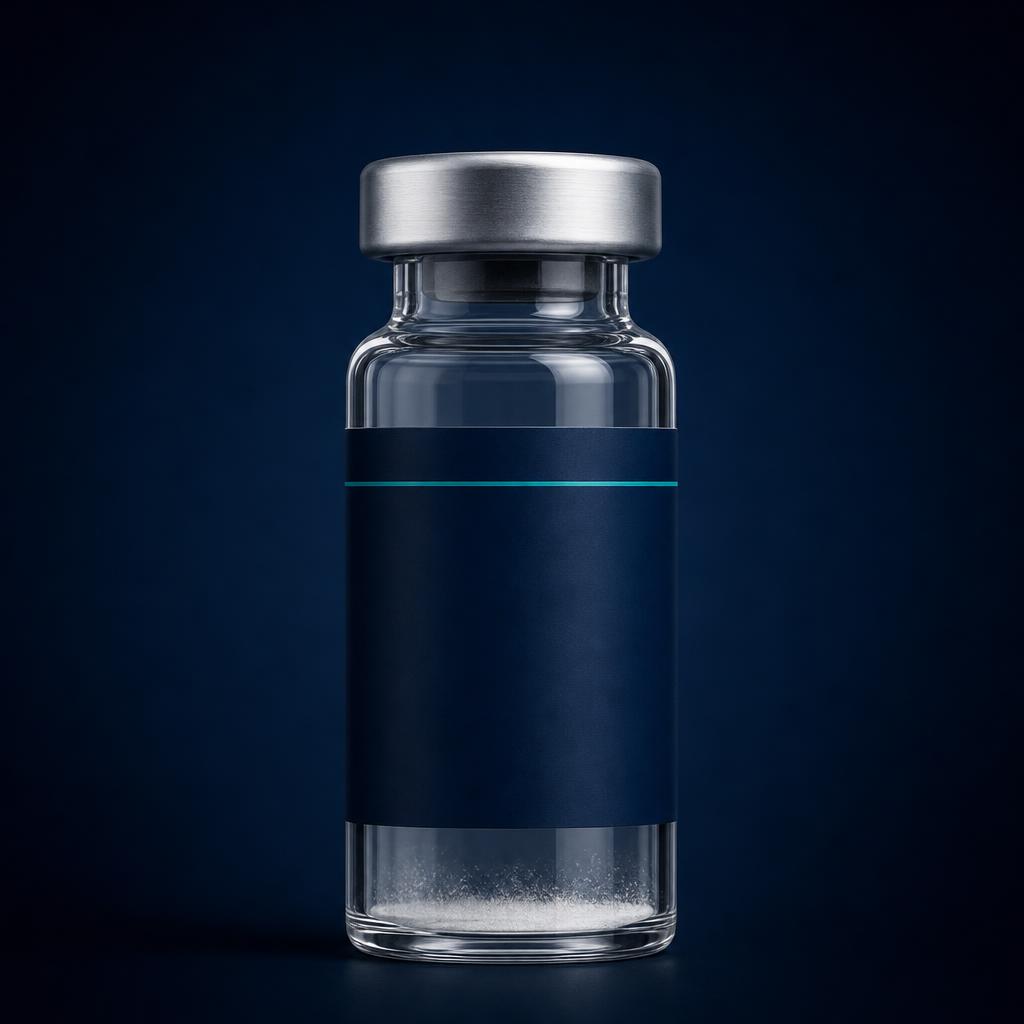
Cagrilintide
10 mg
Long-acting amylin analog studied for amylin and calcitonin receptor signaling in laboratory models.
$99.99
DetailsFree U.S. shipping $175+
AOD-9604 is a synthetic 16-amino-acid peptide derived from the C-terminal region (residues 176–191) of human growth hormone, with an added N-terminal tyrosine.
It is studied because it isolates a defined fragment of the growth-hormone sequence, allowing investigators to examine fragment-associated activity in adipocyte and lipid-metabolism models separately from the broader signaling profile of the intact hormone.
For research use only — not for human or animal consumption.
Supplied solely for legitimate laboratory and research purposes. Not for medical or veterinary use, diagnosis, treatment, or prevention of disease.
Analytical values reflect per-lot documentation and appear once a batch is released.
Topics reflect published preclinical and in vitro research. Reference only — not a claim of clinical outcomes.
The 176–191 fragment of hGH was investigated in the 1990s after work at Monash University suggested that lipolytic activity of growth hormone could be localized to the C-terminal region.
AOD-9604 was subsequently developed as a synthetic analog of that fragment and has been the subject of published preclinical work exploring its metabolic effects.
Contemporary laboratory research continues to use AOD-9604 as a defined-sequence reference peptide in adipocyte and metabolic in vitro systems.
10 mg
Long-acting amylin analog studied for amylin and calcitonin receptor signaling in laboratory models.
5/5 mg
Research blend pairing an amylin analog with a GLP-1 receptor agonist for combined-pathway studies.
5 mg
Unmodified C-terminal growth-hormone fragment used in comparative adipose-tissue research.
4 strengths available
Triple agonist peptide targeting GIP, GLP-1, and glucagon receptors in preclinical metabolic research.
Up to 64% lower per mg